Esperanto? No!
Easy and fun ways to improve your pan-European language skills

Esperanto didn’t really make it; so for better or worse, English is the European lingua franca. In many ways, this has made it easy to be lazy as a native English speaker. After 20+ years, I’m a solid B2 German speaker—but that really should be C2 after being here so long.
The reality is, I spend my days working in English. We speak a mix of English and German at home, and much, if not just about all, of the media I consume is in English.
The truth is, I’m at a comfortable plateau. I can interact with my German family, host our friends, and speak German. Gone are the days when I tuned out because I couldn’t keep up with the conversation.
I want to do better than that, though. Anyone who lives life in more than one language—and isn’t completely fluent in both—understands that they are a reduced version of themselves in the weaker language.
I began to grasp this during the years I worked on the Vodafone account. I was in a staff augmentation role as a UX professional at their European headquarters in Düsseldorf. The work was okay, but I really liked my colleagues and the UX team. It was truly international. Everyone had a name tag at their desk with flags representing the languages they spoke.
Of course, the company language was English. In meetings, I was always comfortable expressing myself and speaking up, which is my natural tendency anyway. The same was true for other English speakers or people who had a strong command of English. Others, who could understand English but were less confident speaking it—especially in a group setting—were more reticent to contribute.
Later, I was staffed on a project for O2/Telefónica in Munich. The company language was German. In meetings, I understood what was going on (mostly), but I kept my mouth shut. I probably still would.
At this point, the idea of taking German classes is a non-starter. I don’t have time, and there isn’t enough language friction in my life for me to feel I need to do so.
But I want to feel more confident and fluid in my German speaking and comprehension. And I don’t want to sit in a class with someone barking German grammar rules at me. What can I do?
One technique I’ve adopted is listening to German podcasts on subjects I enjoy, and I’ve found two apps that have been helpful.
The first is a straightforward language-learning AI app called LanguaTalk. You essentially talk to an AI as if you’re having a phone call. You can discuss subjects you find interesting or have a debate, then review the conversation like a chat thread to see where you’ve made errors. The best thing about learning a language with a robot is that you don’t feel self-conscious or worry about being tedious by making the same mistakes over and over or “not getting it.” It’s also de facto custom-tailored to your level of ability. This is the one and only use case I can think of where talking to a robot is a good idea.
LanguaTalk isn’t the only AI-style language-learning app (and this isn’t an ad), but it’s the one I happened to find.
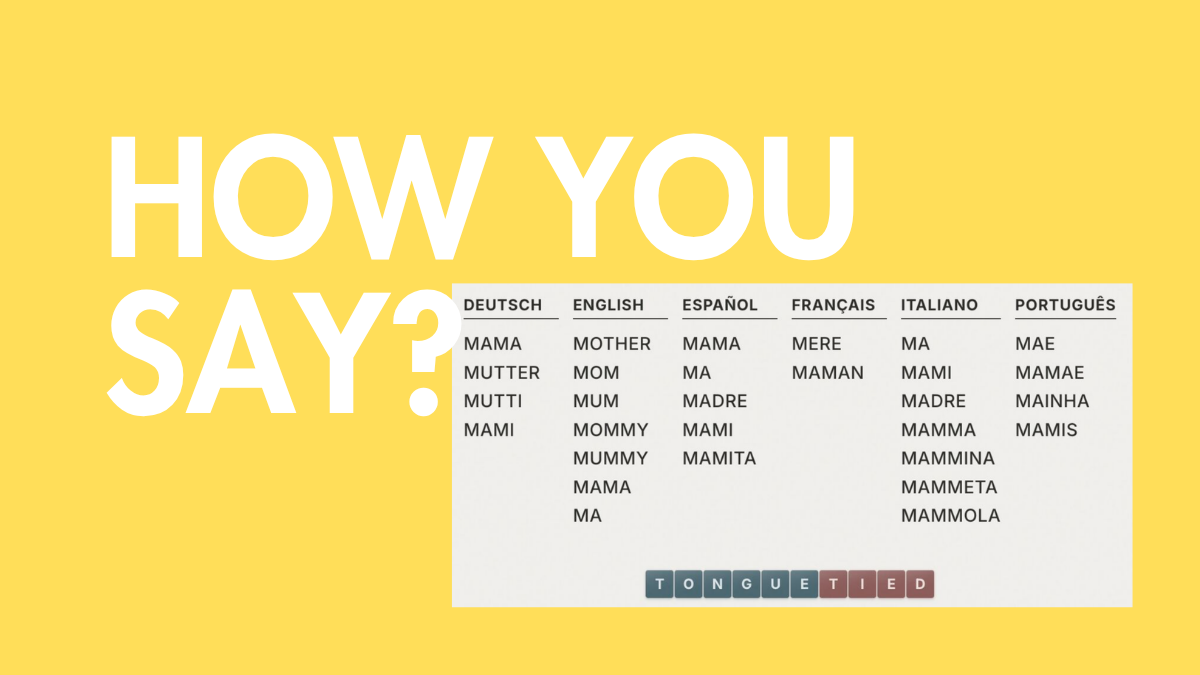
The other app is fun. It’s called TongueTied . It's an online Scrabble-type word game that you can play in multiple languages! As a lifelong Scrabble player, this game is a dream come true. It also strikes me as the perfect word game for a European audience.
Most Europeans speak a second language, and this is a fun way to sharpen your vocabulary and stay in touch with friends. I’ve been mostly playing with English speakers who also speak German, but I need to reverse that.
A new feature is a daily word scramble in up to six languages. You can play with no sign-up here, but I highly recommend downloading the app!